The Psychology of Holding Through Drawdowns — When to Stay and When to Fold
Every trader who has ever had a winning position has also had to decide whether the dip is noise or a reversal. The decision process that gets it right is not intuition — it's framework.

Every good trade has bad moments.
Price enters a drawdown phase. The position goes against you temporarily. Your thesis is being tested. And your brain starts generating reasons to exit — reasons that have nothing to do with whether the trade is still valid.
The traders who separate profitable years from losing years are the ones who distinguish signal drawdowns from thesis-invalidating moves. InDecision provides a framework for this distinction.
The Two Types of Drawdowns
Noise drawdown: Normal price volatility within the context of a valid thesis. The support level held. The higher timeframe structure is intact. The factors that drove the original conviction haven't changed. Price is just oscillating.
Signal drawdown: Price is telling you the thesis is wrong. A structural level broke. Funding flipped to the other side. Volume is expanding in the wrong direction. The InDecision conviction score has degraded significantly.
The critical skill is distinguishing between these two in real time, without your P&L coloring the decision.
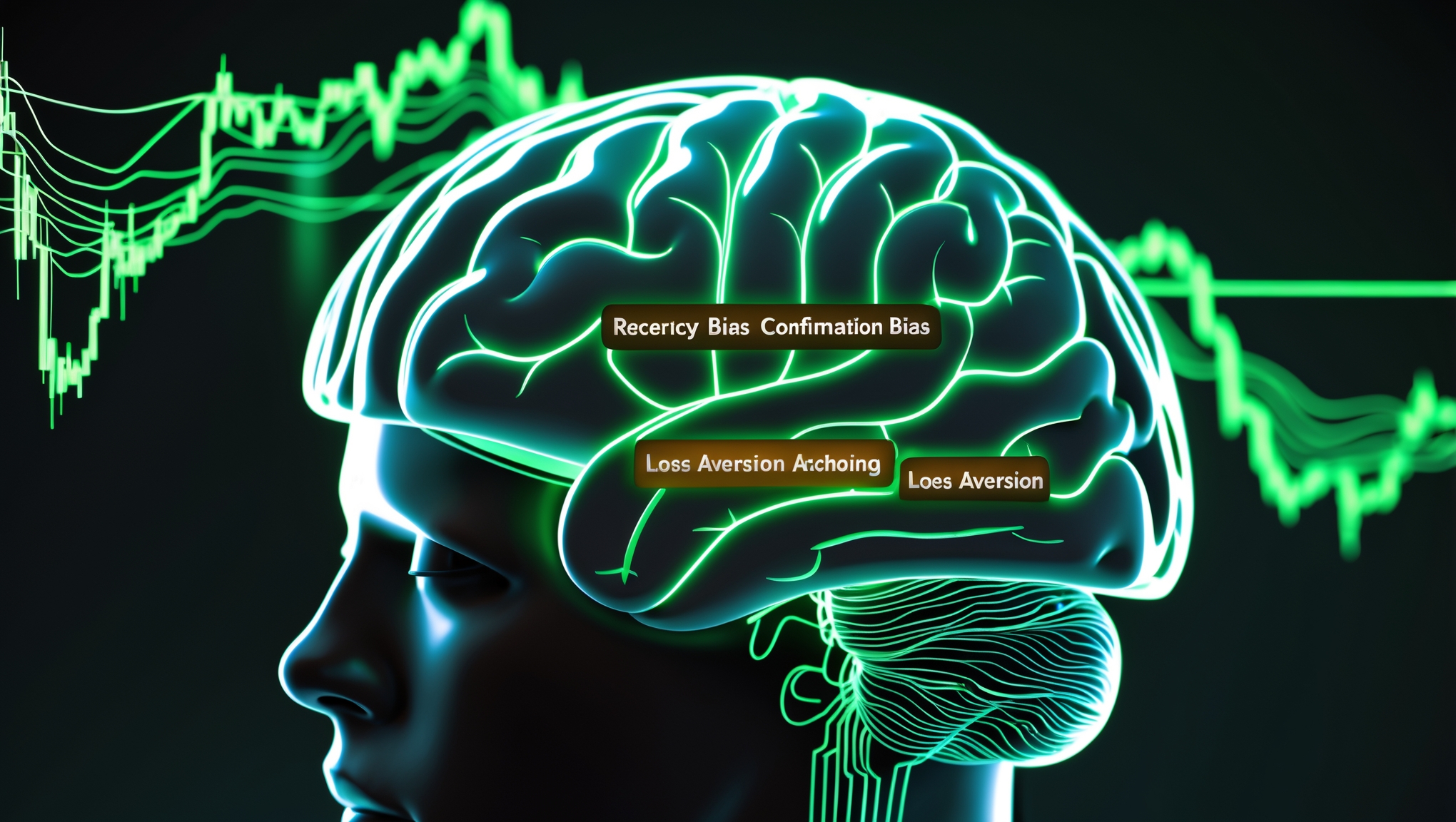
Why Your Brain Lies to You During Drawdowns
Loss aversion is the primary culprit. Your brain weighs potential losses approximately twice as heavily as equivalent gains. When a trade is down 5%, your brain experiences something close to what it would experience from a 10% gain — in the wrong direction.
This asymmetry creates specific failure modes:
Premature exit: You exit a valid position because you can't tolerate the discomfort of being down, even though the thesis is intact. You watch the trade recover and reach your original target. This happens constantly.
Irrational holding: You refuse to take a loss because doing so would make it "real." You hold through a thesis-invalidating move, telling yourself "it'll come back," and watch a manageable loss become a portfolio-defining disaster.
Both failure modes stem from the same source: letting P&L drive trade management instead of structure.
The InDecision Drawdown Protocol
InDecision treats drawdowns with a specific three-step protocol:
Step 1: Check the invalidation level
Before any position is entered, InDecision identifies the level that, if broken, means the trade is wrong. Not "it'll recover if it just gets below here" — wrong. As in, the thesis no longer holds.
During a drawdown, the first question is: has the invalidation level broken?
If no, the trade is experiencing noise. Hold. If yes, the trade is invalidated. Exit. Period. No negotiation.
Step 2: Re-run the conviction score with current data
The conviction score isn't static. During a drawdown, update the factor inputs:
- Has the funding environment shifted?
- Has volume expanded against the position?
- Has the daily pattern or session context changed?
- Has technical confluence degraded?
If the conviction score drops from 80% to 75%, the drawdown is acceptable — factors are holding. If it drops from 80% to 55%, InDecision reduces size or exits, because factor alignment is weakening even before the invalidation level breaks.
Step 3: Separate thesis from price
Write down (or articulate clearly) why you entered the trade. The reasons should be factor-based: "InDecision scored bullish at 78% with specific factor alignment." Then ask: have those factors changed?
If the factors haven't changed and the invalidation level hasn't broken, the only thing that has changed is price. Price is allowed to be wrong in the short term. Your job is to maintain conviction in a valid thesis long enough for the market to agree.
The Size Management Escape Valve
One tool InDecision uses during drawdowns that isn't available in a static approach: partial exit to manage psychological pressure.
When conviction drops to 65-70% during a drawdown (above the 50% ABSTAIN threshold but below the full-size threshold), InDecision may exit 40-50% of the position.
This isn't capitulation. It's recalibration. You reduce exposure to the level appropriate for current conviction. If the remaining position recovers and factors re-align above 70%, you rebuild size.
The partial exit allows you to maintain the trade (because the thesis isn't wrong) while managing the psychological weight of a drawdown (because the exposure is lower).
The Number That Matters
The only question during a drawdown: "Is the thesis still valid?"
Not: "How much am I down?" Not: "Was I right before?" Not: "What if I get stopped out right at the bottom?"
Thesis validity is determined by structure and factors — not by your entry price and not by your current P&L.
InDecision gives you a systematic answer to this question. The score either still supports the trade or it doesn't. Emotion doesn't get a vote.
Explore the Invictus Labs Ecosystem
// FOLLOW THE SIGNAL
Follow the Signal
Stay ahead. Daily crypto intelligence, strategy breakdowns, and market analysis.
Get InDecision Framework Signals Weekly
Every week: market bias readings, conviction scores, and the factor breakdown behind each call.