Market Structure vs. Indicators: What Actually Predicts the Next Move
Most retail traders lead with indicators. Most institutional traders lead with structure. The difference in results is not a coincidence. Here's why structure is primary and indicators are secondary.
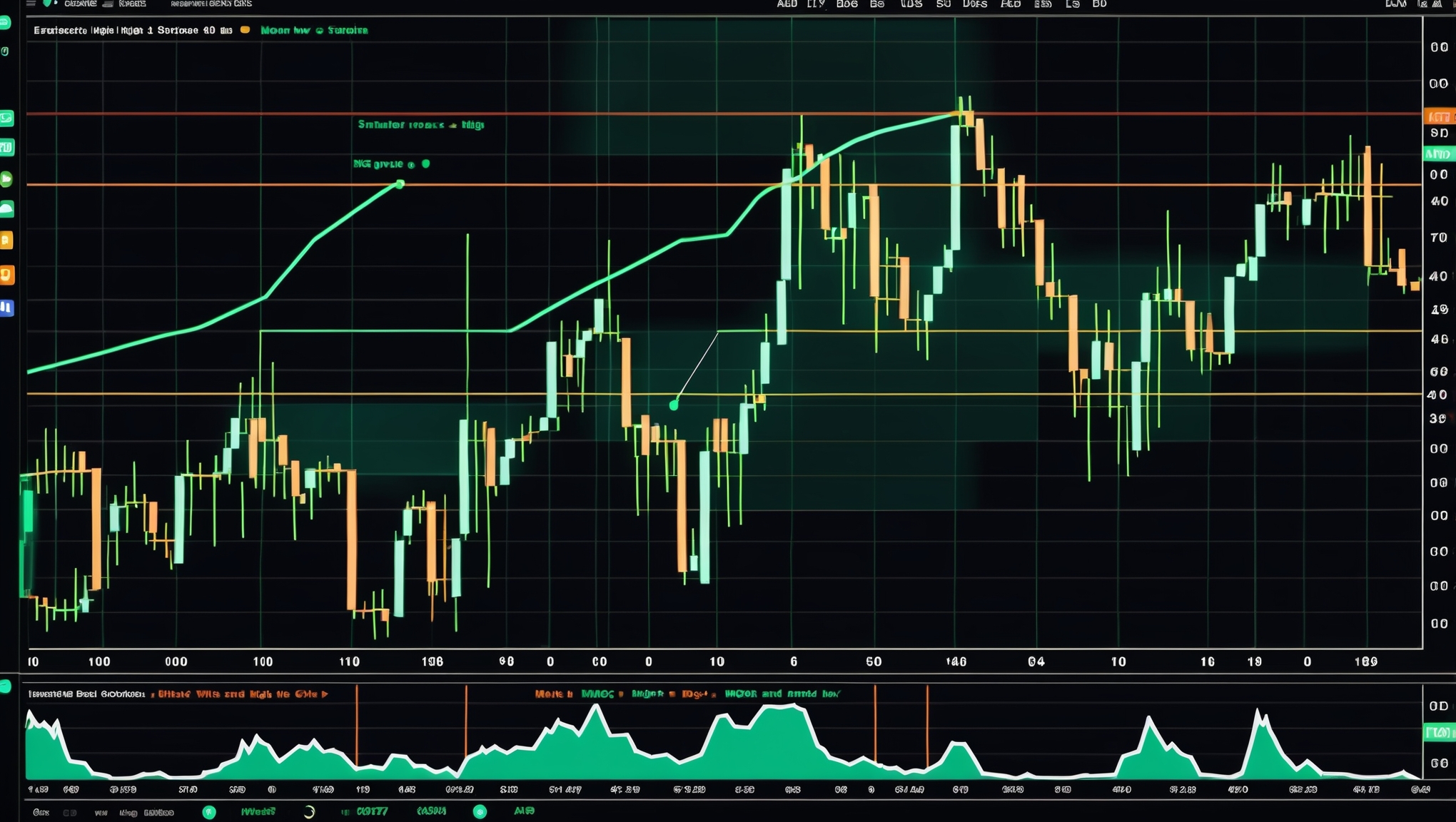
Ask a new trader how they analyze the market and they'll describe their indicator setup: RSI overbought/oversold, MACD crossovers, moving average stacks, Bollinger Bands.
Ask an institutional trader the same question and they'll describe structural analysis: where are the significant highs and lows? What's the swing structure? Where is liquidity resting?
The distinction isn't style — it's causality.
Indicators Are Derived From Price
Every indicator — every single one — is a mathematical transformation of price data. RSI is a ratio of up-closes to down-closes. MACD is the difference between two exponential moving averages. Volume-weighted averages are exactly what they sound like.
This means indicators are inherently lagging. They react to price. They don't predict it.
Indicators are useful for quantifying what already happened — for measuring momentum, for identifying extremes, for confirming what the price action is already showing. But they cannot tell you what's coming next, because they don't have access to that information.
Structure Is Where Decisions Are Made
Market structure — the pattern of higher highs and higher lows (uptrend) or lower highs and lower lows (downtrend) — is not derived. It's descriptive of the actual decision history of market participants.
Every significant swing high represents a price level where sellers overwhelmed buyers. Every significant swing low represents a level where buyers overwhelmed sellers. These aren't abstractions — they're records of actual transactions.
When price returns to a previous swing high, you're not looking at a "resistance level" in some theoretical sense. You're looking at a price where, historically, sellers showed up in volume. Those same sellers often show up again for the same reasons (portfolio management, profit-taking, hedging).
Structure tells you where decisions were made in the past. Since markets are driven by human psychology, and human psychology is consistent, structure tells you where decisions are likely to be made again.
How InDecision Treats Structure vs. Indicators
Within the Technical Confluence factor (15% weight), InDecision weights inputs in this order:
- Structural levels (highest weight): previous swing highs/lows, weekly/monthly pivots, range boundaries
- Moving average confluence (secondary): when structural levels and moving averages converge, they have more power than either alone
- Oscillator signals (tertiary): RSI divergence, MACD histogram, StochRSI — only in confluence with structural and MA signals
Oscillators never override structure in InDecision's framework. A bullish RSI divergence at a random price level is noise. A bullish RSI divergence at a major structural support level with a moving average confluence is signal.
The BOS/CHOCH Framework
InDecision's structural analysis uses the Market Structure Shift language that has become standard in institutional analysis:
BOS (Break of Structure): A candle close beyond a previous swing high (bullish BOS) or swing low (bearish BOS). This confirms the trend direction.
CHOCH (Change of Character): A reversal of the trend — a bullish CHOCH is when a market making lower highs finally takes out a swing high, suggesting the downtrend is ending. A bearish CHOCH is the reverse.
These structural events are more significant than any indicator signal because they represent actual changes in who is in control of the market. After a bullish CHOCH, InDecision's bias shifts toward long. After a bearish CHOCH, toward short.
The Indicator as Confirmation
Here's the proper use of indicators: confirmation of structural signals.
When price breaks above a major structural level (BOS), InDecision looks for:
- Volume expanding on the break (confirms the move had participation)
- RSI not in extreme overbought (room to run)
- MACD histogram positive and expanding (momentum confirmation)
These indicators aren't triggering the bias — they're confirming it. The structure is the trigger. The indicators vote on whether the structural signal is high quality.
The Practical Implication
Before you look at any indicator, answer these questions:
- What is the swing structure? (Higher highs/lows or lower highs/lows?)
- Where are the nearest significant swing highs and lows?
- Is price approaching, at, or breaking through a structural level?
Once you have those answers, indicators have something meaningful to confirm. Without those answers, your indicator signals are pattern-matching in a vacuum.
Structure first. Always.
Explore the Invictus Labs Ecosystem
// FOLLOW THE SIGNAL
Follow the Signal
Stay ahead. Daily crypto intelligence, strategy breakdowns, and market analysis.
Get InDecision Framework Signals Weekly
Every week: market bias readings, conviction scores, and the factor breakdown behind each call.