Journaling Your Losers: The Uncomfortable Path to Consistency
Winning trades teach you almost nothing. The losers are where the actual signal about your process lives, and most traders throw that data away out of pure discomfort.
Pre-Trade Checklists and Why Discipline Beats Intuition
Every blown account has the same origin story: a good trader who trusted a feeling instead of a process. Here is why a written checklist outperforms instinct, and what a real one actually contains.
Overtrading: The Market Is Not Your Entertainment
Every extra trade you take beyond your edge is a bet against your own statistics. Here's the mechanism by which boredom quietly destroys more accounts than bad analysis ever will.
The Waiting Game: Why Patience Is the Highest-Value Skill
Every trading system eventually gets good at finding setups. Almost none get good at doing nothing between them — and that gap is where most accounts actually die.
How to Think in Probabilities, Not Certainties
Every losing trader is fluent in the language of certainty. Every profitable one has learned to speak in odds instead — and the switch changes everything about how a position is sized, held, and cut.
The Revenge Trade: How Losses Manufacture Bad Decisions
Losses do not just hurt your P&L. They distort your time horizon, compress your judgment, and make otherwise disciplined traders behave like amateurs. The revenge trade is not an emotional weakness; it is a measurable failure mode.
Why Profitable Traders Miss Moves Intentionally
Elite traders don't maximize participation — they maximize selectivity. The discipline to watch a move happen without acting on it is not a weakness. It is the mechanism.
The FOMO Entry: Why Your Worst Trades Feel Like Your Best Ideas
The trades that feel most urgent are usually the ones with the weakest structure. That mismatch is not intuition, it is a warning signal the market has already learned to exploit.
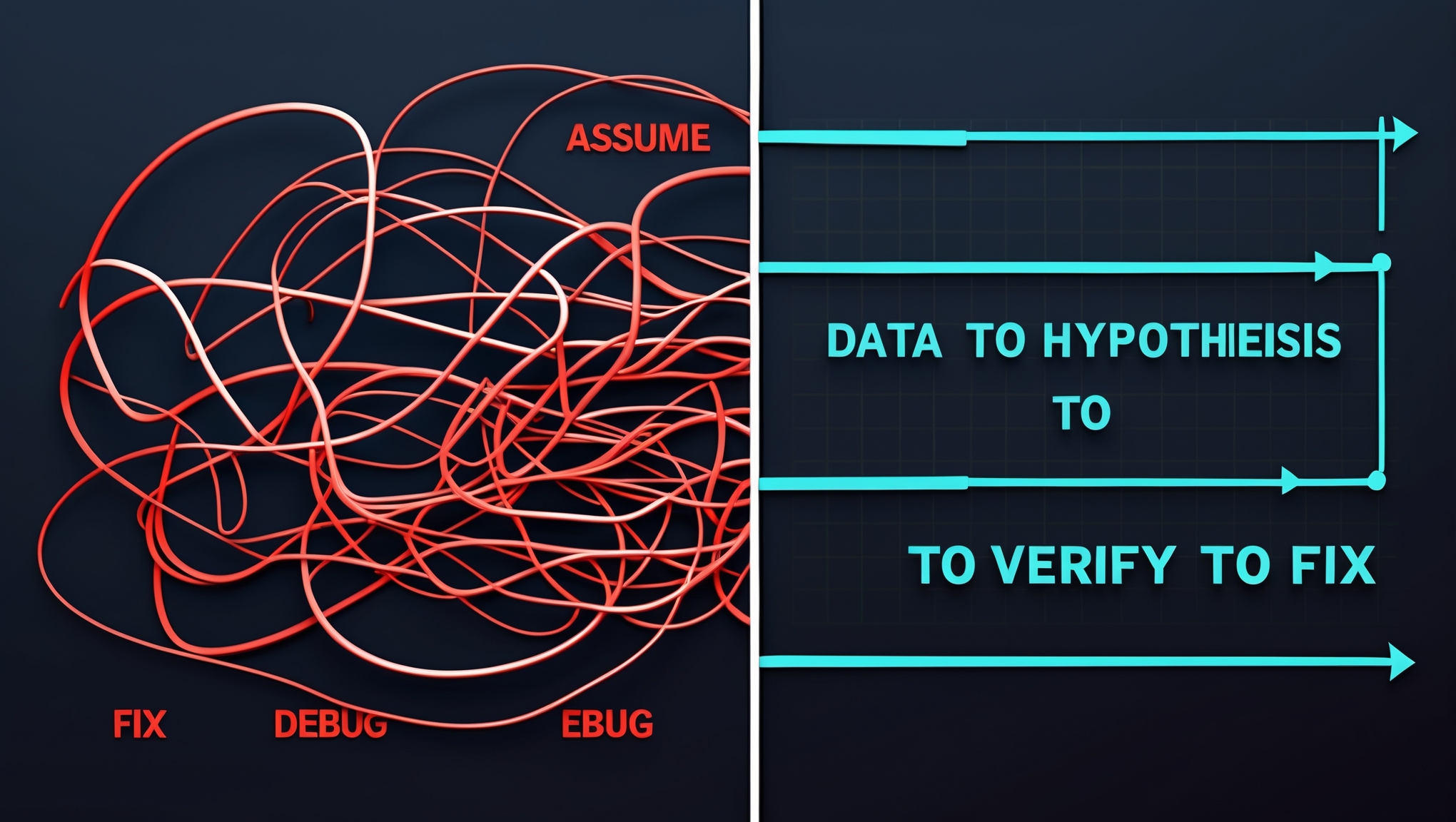
Evidence Before Design: A Debugging Discipline
The twenty minutes you spend pulling data before writing a fix are not lost time. They are the only reason the fix will be right. Most wrong solutions are built confidently on top of unverified assumptions — and the data was always one query away.
Why FOMO Entries Feel Smart Right Before They Wreck You
The worst trades rarely feel reckless in the moment. They feel urgent, obvious, and somehow necessary, which is exactly why FOMO is a structural trading problem rather than a simple discipline issue.
How InDecision Calls ABSTAIN — The Signal You Actually Need
ABSTAIN is InDecision's most powerful output. Not because it prevents bad trades — though it does — but because it forces you to recognize that the best trade is sometimes no trade.